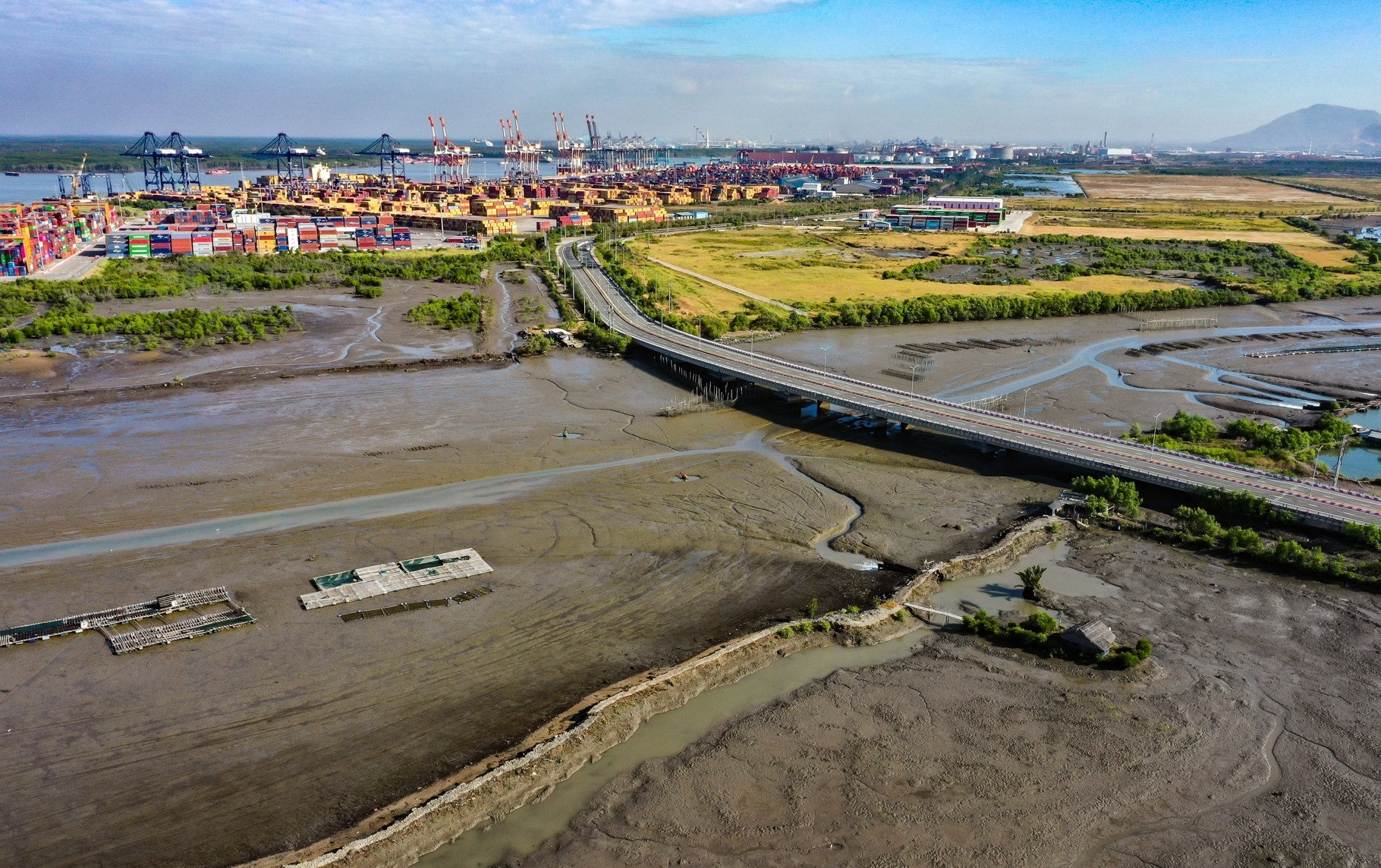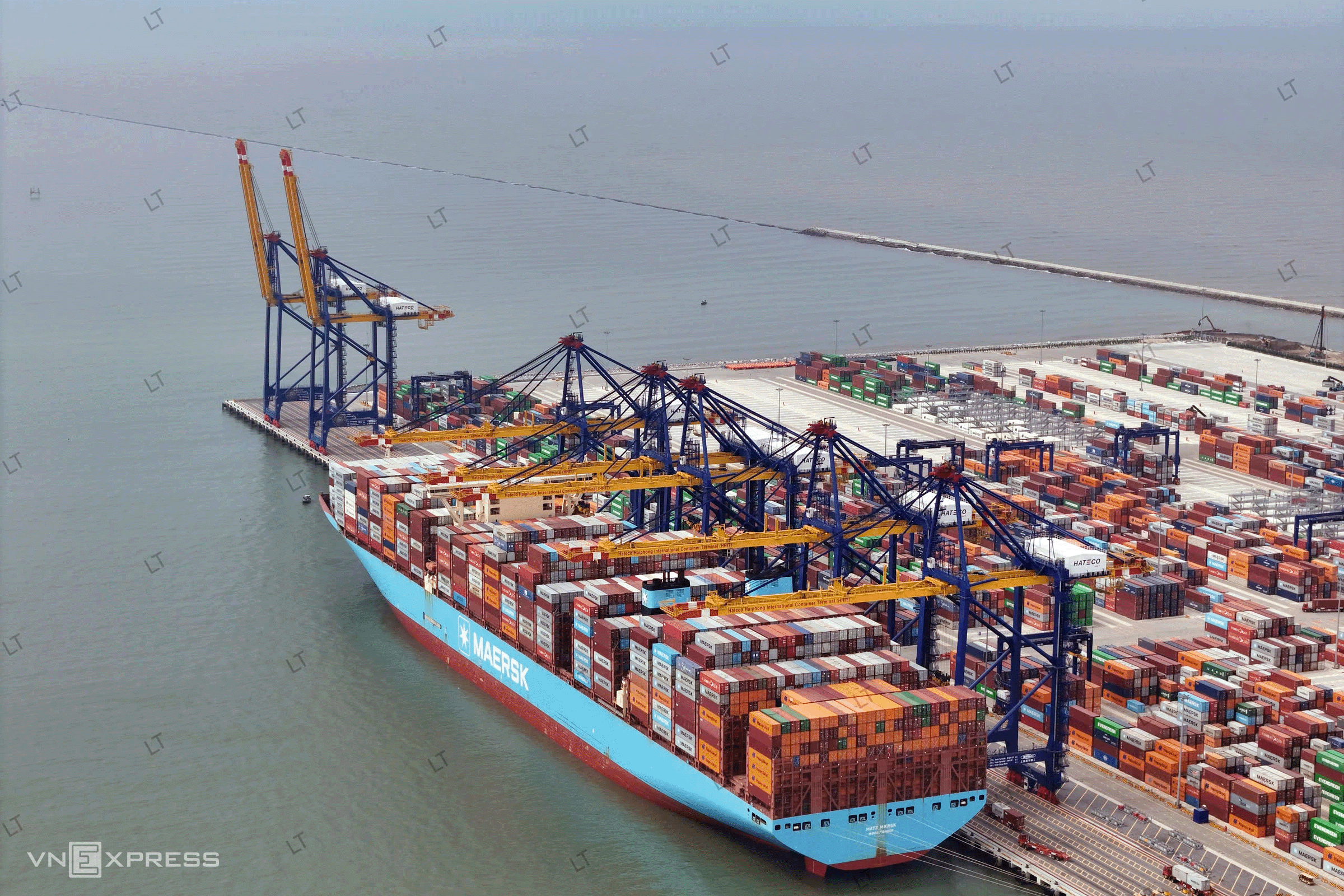
Thanks to the EVFTA, Vietnam has become one of Europe’s most important ‘economic anchors’ in Asia, according to the EuroCham Chairman.
This was remarked by Bruno Jaspaert, Chairman of the European Chamber of Commerce in Vietnam (EuroCham), on the occasion of the 6th anniversary of the Vietnam-EU Free Trade Agreement (EVFTA) since it came into effect on August 1, 2020.
According to data from the Customs Department and the Statistics Office, bilateral trade between Vietnam and the EU since the establishment of diplomatic relations until now (January 1995 to June 2026) has surpassed 900 billion USD.
Up to 42.6% of that, equivalent to 383.8 billion USD, was generated since the implementation of the EVFTA. In the first half of 2026 alone, bilateral trade reached 41.4 billion USD, with Vietnam enjoying a surplus of 22 billion USD, surpassing the entire year of 2019 (21.7 billion USD), before the agreement officially took effect.
This agreement has also boosted the business investment activities of European companies in Vietnam. The EuroCham Q2 Business Confidence Index (BCI) shows that 55% of surveyed companies see Vietnam as a core operation hub or a key growth market.
Among the companies involved in import-export, half received direct benefits from the EVFTA. Up to 66% reported specific financial savings, most in the range of 5 – 15%. According to Mr. Bruno Jaspaert, after 6 years, the impact of the EVFTA is both visible and measurable.
“The agreement has reshaped trade flows, built business confidence, and turned Vietnam into one of Europe’s key ‘economic anchors’ in Asia,” he commented.
Now in its 7th year, the EVFTA is reaching the milestone of the EU officially completing the trade liberalization roadmap, eliminating tariffs on 99% of Vietnam’s export products. Meanwhile, Vietnam will finish the process of reducing EU tariffs by 2030.
EuroCham Vice President Jean-Jacques Bouflet – who was part of the EU negotiation team during the EVFTA discussions – believes that European products like high-tech goods, advanced machinery, and pharmaceuticals are direct levers to boost Vietnam’s industrial productivity.
On the other hand, Vietnam’s strengths in electronics, mechanics, textiles, footwear, wood products, and agricultural products are the perfect pieces to strengthen supply chains and serve millions of European consumers.
“There is still a lot of room for deeper cooperation,” said Jean-Jacques Bouflet. He encouraged Vietnam to increase imports of high-tech solutions from Europe to modernize its industry, take control of the production value chain, and balance bilateral trade.
As tariff barriers are gradually removed, administrative complexity and compliance costs have emerged as the main bottlenecks, according to EuroCham.
Among the businesses facing difficulties in taking advantage of the agreement, 50% pointed out that domestic tax management, complicated tax procedures, and slow VAT refund mechanisms are the core obstacles.
33% mentioned the complexity of the Rules of Origin (RoO), the Certificate of Origin (C/O) procedures, and different verification requirements across jurisdictions. 17% think compliance costs are still too high compared to the potential tax savings.
EuroCham quoted a multinational manufacturing company saying that less than 20% of shipments to the EU currently qualify for EVFTA benefits because EU member states and Vietnam interpret and process the documents differently, and the constantly changing origin requirements make compliance difficult.
Therefore, maintaining Vietnam’s export advantage will increasingly depend on simplifying customs procedures, speeding up tax refunds, digitizing documents, and clarifying the rules of origin, according to EuroCham.